I'm becoming a fixture at the local thrift shops. If the traffic gods are cooperating during my lunch hour, I'm able to comfortably make it to three local shops, and on really fortunate days, make it to a fourth even further out. I've gotten the search down to a science now... favorite parking spots, key locations in the store where new items can be found, shortcuts to make it to the next store. It's very much the Thrill of the Hunt, though I have to admit that more times than not I'm disappointed with the results. Thanks to eBay, I feel that most of those treasures bound for Goodwill or the Garage Sale box are now being posted online. This of course motivates me all the more to go out and find some
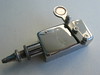
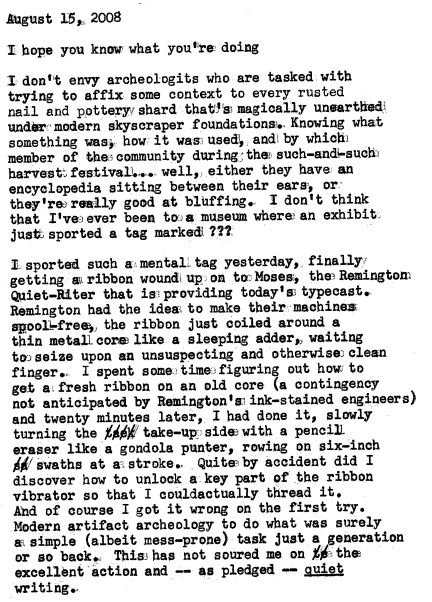
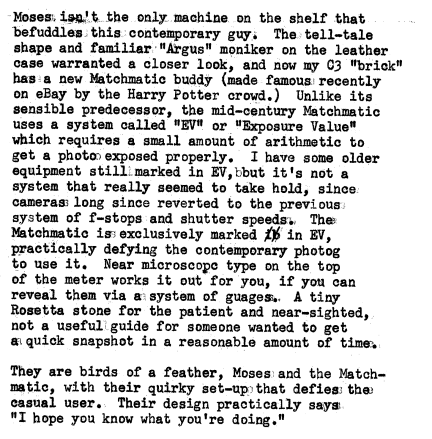
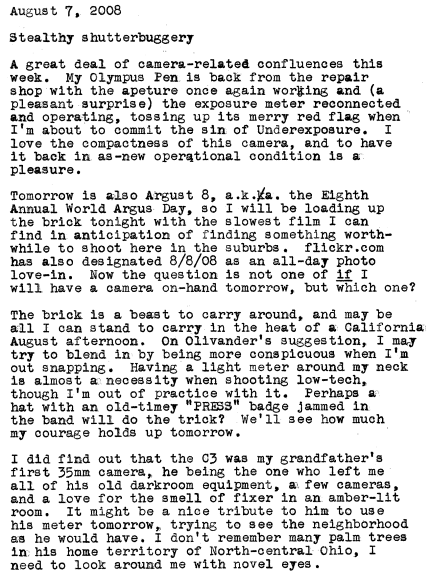
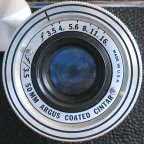
priceless treasure to bring home before it's badly boxed up and shipped off to points unknown. This week's treasure: an Argus C3 camera in its case. Motivation for buying it: smaller than a typewriter, so easier to justify, and an American-made camera that was not a Kodak, manufactured in Ann Arbor, Michigan, one of the places I've called home. Also, it's cool. And heavy. And black. And full of dials and knobs and buttons and...
ooo, just wrap it up I'll take it I don't need a bag!
A little 'Net research filled in all the blanks: affectionately known as "the brick" for its complete defiance of all things ergonomic, this hunk of metal and bakelite is credited for popularizing the 35mm format in the U.S.. Made in the millions, it finally gave way to sleeker designed cameras both domestic and from overseas -- cameras that did not have sharp edges, or require a four-step process to take a proper photo. I was holding in my hands the very essence of obsolescence, but with the bonus that I could actually find film for the blasted thing, cheaply and locally. In fact, better than cheaply, as I still had some long-expired black and white rolls rattling around at home. I checked the orphan camera manuals page for winding directions -- wind, release lock, wind, focus, cock shutter,
click -- loaded up the film and planned to shoot a quick roll in the morning around our local city hall: a modern swoopy-styled building with a great deal of doorways, windows, shadows, and a fountain smack in the middle. Armed only with the "sunny 16" rule and a self-determined half-hour time limit, I set to work.
I can't say I was very optimistic. I've checked Flickr for other C3 enthusiasts and their photos, and have seen the gamut. One example has a flipped element in the lens assembly, so the photos all have an artistic, astigmatic quality in one corner. Much has been said about the "soft" qualities of the lens, and I had no assurance that this one was still light-tight after all these years. Net research showed that this camera was perhaps 60 years old, and there was no indication of how long it had been sitting in its case, or when the mechanisms had been used last. Would the shutter speed even be close to accurate? How badly am I judging the light? I didn't have a meter on me, so with the exception of the rangefinder, I was flying blind. No double-exposure protection here, either. Classic cameras make it colossally easy to goof up. I dropped off the roll at the local lab, and hoped.
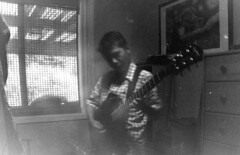
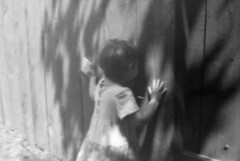
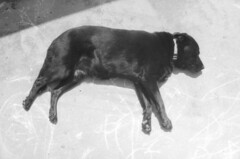
Frankly, I'm thrilled. (flickr.com)
I'm sure I owe a great deal to
Action Photo for the outstanding processing job: not just some pimply teen running a C-41 machine, but actual proper experts running a quality lab, taking time to adjust for the fact that this was seven-year-old film in a sixty-year-old camera. The photographer is of course to blame for the mundane subject matter, but the Argus held up like a champ. Brick it may be, but it took far better photos than many of the smooth plastic junkers I've owned over the years. Enthusiasts refer to this as the "Model A" of cameras, and for good reason. It's basic, it's functional, it's user-repairable (!), and it Just Works. I hope I do half as well when I'm in my sixties.